
Facility Services: 2026 Market Update


GENERAL TRENDS

Industry Outlook and Observations

  • In 2025, commercial property maintenance and multi-trade facility services remained a resilient “non-discretionary” spend category driven by asset uptime, safety/compliance, and cost control—supporting continued outsourcing and consolidation activity.

  • North America market size: estimates place the North America facility management market at ~$456B in 2025, forecast to reach ~$532B by 2030 (~3.1% CAGR).

  • 2025 buyer priorities increasingly centered on cost efficiency and operating reliability, with a strong push toward vendor consolidation and tech-enabled service delivery. JLL characterizes FM as a “$3 trillion” global industry, noting 84% of CRE/FM leaders cite escalating operating costs/budget constraints as the top concern. 

Recent and Upcoming Trends

  • Vendor Consolidation + Bundled Scopes (2025 → 2026+)

    • Customers increasingly prefer fewer partners that can cover preventative maintenance + break-fix + compliance documentation, supported by portfolio reporting.

    • JLL specifically highlights consolidating contracts/suppliers and prioritizing providers with integrated/self-delivery capabilities as a leading cost-reduction approach.

  • AI + Data-Powered Operations (accelerating into 2026+)

    • In 2025, AI adoption moved beyond experimentation: 28% of organizations have embedded AI in FM operations (rising to 46% for very large organizations).

    • Expect 2026+ competitive separation around: faster dispatch, better triage, tighter closeout documentation (photos/notes), and predictive maintenance—especially for multi-site portfolios where reporting standardization is valuable.

  • Labor Tightness in Skilled Trades (persistent 2025 reality; 2026+ constraint)

    • The skilled trade labor market remained tight in 2025, driven by demographic attrition and sustained demand across maintenance, construction, and infrastructure. Labor availability is expected to remain a structural constraint in 2026 and beyond.

    • Providers with strong recruiting, training, utilization, and route density are better positioned to maintain service levels, protect margins, and gain share.

  • Reliability / Mission-Critical Standards “Spill Over” into General Commercial Maintenance

    • Business continuity is the foremost risk priority for mission-critical environments (e.g., data centers, hospitals, labs), pushing higher expectations around resilience planning and uptime. 

    • Even outside mission-critical, many owners are adopting stricter SLAs and documentation norms learned from those environments.

M&A Catalysts

  • Fragmentation + roll-up economics: route density, centralized dispatch, standardized KPIs, and procurement-driven vendor consolidation continue to favor platform strategies.

  • Cost pressure drives outsourcing: Strong push toward outsourcing/streamlining supply chains as a cost-reduction lever.

  • Demand for integrated capabilities: acquirers continue to buy breadth (multi-trade, compliance, specialty) to win “single-vendor” contracts.

  • Technology as a differentiator: platforms acquiring businesses with strong systems and reporting discipline (or quickly upgrading them) will outperform.

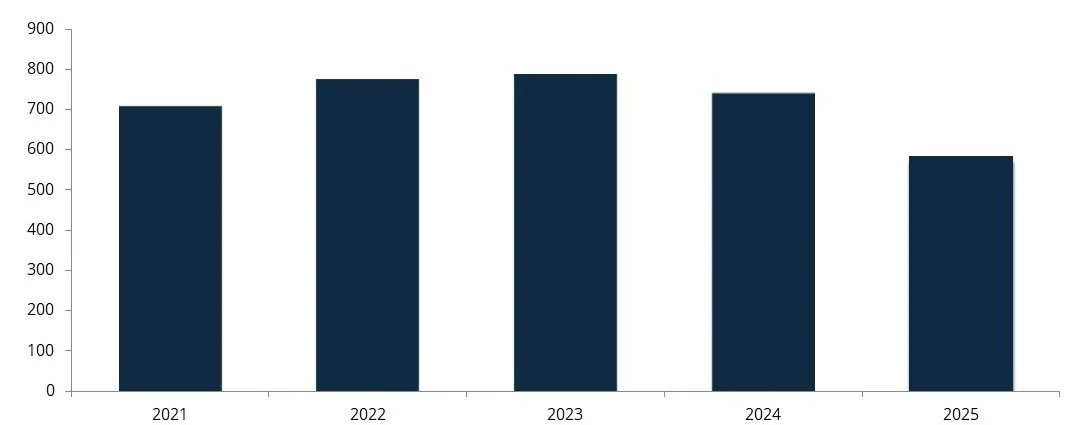
M&A ACTIVITY

North American Facility Services Transaction Velocity
DEAL SPOTLIGHT

Date: January 2025
Target: Advanced Facility Solutions (AFS)
Buyer: Persona-Triangle (Exeter Street Capital Partners / Patriot Capital Group affiliate)
Transaction Value: NA

Strategic Fit:

  • The acquisition strengthens Persona-Triangle’s position as a scaled, multi-site facilities services platform by expanding geographic reach, service density, and customer coverage.

  • AFS adds recurring maintenance relationships and coordinated service delivery capabilities that align with customers’ preference for vendor consolidation and single-point accountability.

Expected Outcome:

  • The combined platform is expected to benefit from increased route density, improved technician utilization, and broader cross-selling of preventative and reactive maintenance services.

  • The transaction supports a continued buy-and-build strategy focused on recurring revenue, operational leverage, and enhanced enterprise value.

Date: April 2025
Target: Kept Companies
Buyer: DFW Capital Partners
Transaction Value: NA

Strategic Fit:

  • Kept’s recurring service model, national footprint, and dense route structure align with private equity demand for predictable cash flow and operational scalability in facilities services.

  • The business benefits from long-term customer relationships and standardized service delivery across large portfolios.

Expected Outcome:

  • Under new ownership, Kept is expected to continue expanding through organic growth and tuck-in acquisitions, leveraging centralized systems, labor optimization, and procurement efficiencies.

  • The platform is positioned to benefit from ongoing outsourcing trends and consolidation within commercial facilities maintenance.

CLICK HERE FOR 555 RELATED TRANSACTIONS

ABOUT 555 CAPITAL ADVISORS

  • Investment bank and advisory firm providing bespoke M&A, capital raise, and related services to middle market companies

  • Transactions: 100% Sale or Divestiture, Growth Capital, Recapitalizations, Mergers, Management Buyouts, Acquisition Advisory and Financing

  • Industries Served: Manufacturing, Business Services, Consumer, Technology, and Healthcare

  • Highly experienced and personalized client relationships: 25+ years experience, 100+ transactions, and mandates, customized solutions

The opinions expressed herein are those of 555 Capital Advisors. There is no guarantee that any predictions/projections as to certain market activity or events will come to fruition or past market or transaction performance referenced within will yield the same results as transactions previously conducted by 555 Capital Advisors.

Securities offered through Finalis Securities LLC Member FINRA & SIPC

This presentation contains information obtained from third parties, including but not limited to market data. 555 Capital Advisors believes such information to be accurate but has not independently verified such information. To the extent such information is obtained from third-party sources, there is a risk that the assumptions made and conclusions drawn by 555 Capital Advisors based on such representations are not accurate.

 

Healthcare: 2026 Market Update


GENERAL TRENDS

Industry Outlook and Observations

  • U.S. healthcare services spending exceeds $3.5 trillion annually, with hospitals and ambulatory care services representing the majority of spend. Hospitals alone account for approximately 30%+ of total U.S. healthcare expenditures, while ambulatory services (including surgery centers, physician practices, and outpatient facilities) continue to grow as a share of overall care delivery.

  • Ambulatory care services now represent ~45–50% of total healthcare spending, driven by clinical advances, payer pressure, and patient preference. Ambulatory Surgery Centers (ASCs) remain one of the fastest-growing settings, with industry forecasts calling for ~5–7% annual growth through the late 2020s as procedures continue migrating out of inpatient settings.

  • Total U.S. healthcare spending is projected to grow at ~5–6% annually through 2030, outpacing GDP. Growth is supported by demographic tailwinds (aging population), rising utilization, and continued outpatient migration, partially offset by reimbursement pressure and labor cost inflation. Unlike many sectors, healthcare services demand is largely non-discretionary, with procedure volumes and utilization expected to remain resilient into 2026 and beyond, even in a slower macroeconomic environment.

Recent and Upcoming Trends

  • Outpatient Migration Accelerates

    • Hospitals and health systems continue shifting procedures toward ASCs, hospital outpatient departments (HOPDs), and specialized clinics, driven by lower cost of care, favorable payer economics, and improved patient experience. This trend is expected to continue into 2026+, benefiting operators with scaled ambulatory footprints.

  • Health System Financial Pressure Drives Strategic Action

    • Many hospitals exited 2025 still facing margin pressure from labor costs, payer mix, and reimbursement lag. As a result, systems are increasingly pursuing portfolio optimization, partnerships, and divestitures—particularly of non-core or standalone assets.

    • Investment in care coordination, revenue cycle management, staffing optimization, and analytics remains a priority as providers seek to improve throughput and profitability without compromising quality or outcomes.

  • Physician Alignment and Platformization

    • Health systems and private equity sponsors continue investing in platform models that aggregate physician practices and outpatient facilities to drive scale, referral capture, and operating leverage. Multi-site, specialty-focused platforms remain a core growth strategy.

M&A Catalysts

  • Fragmentation across care settings: The U.S. hospital market remains highly fragmented, with the top 10 health systems accounting for ~25% of total hospital admissions, while the majority of hospitals and outpatient facilities remain independently operated. Similarly, despite significant consolidation, independent ownership still represents a meaningful share of ASCs, supporting continued platform formation and roll-up activity.

  • Capital needs and balance sheet stress: Ongoing capital requirements (technology, facilities, staffing) are driving providers to seek strategic partners, minority investments, recapitalizations, and full exits.

  • Payer and reimbursement dynamics: Scale continues to matter as reimbursement pressure persists. Government payers (Medicare and Medicaid) account for ~55–60% of hospital revenue, limiting pricing flexibility and increasing the importance of commercial payer negotiations, geographic diversification, and service-line mix optimization.

  • Valuation support for quality assets: Despite broader sector pressure, assets with strong outpatient exposure continue to attract premium interest. ASCs typically generate EBITDA margins in the mid-20% range, materially higher than hospital inpatient margins, supporting sustained strategic and private equity demand for outpatient-heavy platforms.

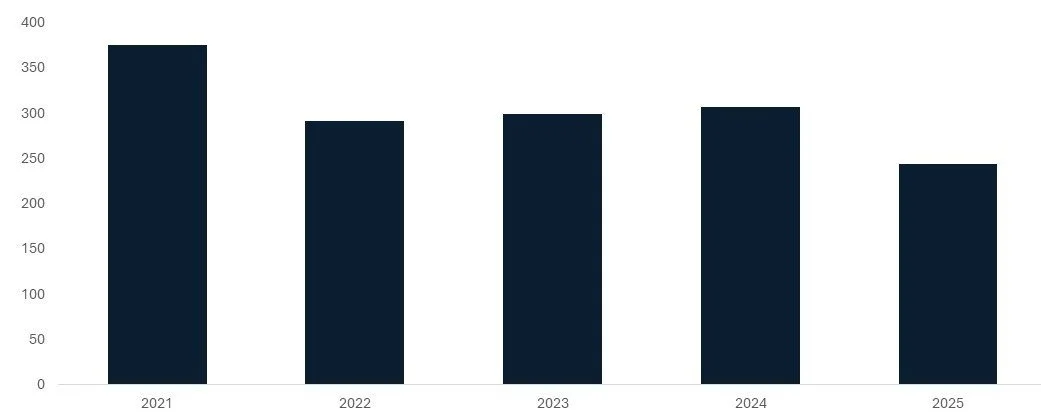
M&A ACTIVITY

North American Healthcare Transaction Velocity

DEAL SPOTLIGHT

Date: March 2025
Target: ShorePoint Health Port Charlotte
Buyer: AdventHealth
Transaction Value: $260 Million

Strategic Fit:

  • The transaction enables AdventHealth to expand its Florida hospital footprint and enhance integrated care delivery across inpatient, outpatient, clinic, and emergency settings.

    ShorePoint Health’s assets, including physician operations and an emergency department, complement AdventHealth’s existing network and support broader continuum-of-care strategies in a rapidly growing regional market. 

Expected Outcome:

  • AdventHealth is expected to drive operational integration, improve access and care coordination, and leverage its scale to enhance clinical quality and financial performance metrics in Southwest Florida, positioning the combined operations to better meet community demand and support growth objectives.

Date: July 2025
Target: CHRISTUS Santa Rosa Medical Center (Medical Center Campus)
Buyer: University Health
Transaction Value: $71 Million

Strategic Fit:

  • The acquisition expands University Health’s inpatient and ambulatory care footprint in the South Texas Medical Center, enabling the system to decompress capacity at its flagship hospital and strategically repurpose the former CHRISTUS campus for a mix of specialty services, outpatient care, and diagnostic offerings.

Expected Outcome:

  • University Health plans to invest in renovations and equipment to transform the campus into a center for integrated care delivery, enhance patient access, support specialty and ambulatory services, and leverage existing infrastructure to accommodate growing community healthcare needs while containing capital intensity relative to new build projects.

CLICK HERE FOR 555 RELATED TRANSACTIONS

ABOUT 555 CAPITAL ADVISORS

  • Investment bank and advisory firm providing bespoke M&A, capital raise, and related services to middle market companies

  • Transactions: 100% Sale or Divestiture, Growth Capital, Recapitalizations, Mergers, Management Buyouts, Acquisition Advisory and Financing

  • Industries Served: Manufacturing, Business Services, Consumer, Technology, and Healthcare

  • Highly experienced and personalized client relationships: 25+ years experience, 100+ transactions, and mandates, customized solutions

The opinions expressed herein are those of 555 Capital Advisors. There is no guarantee that any predictions/projections as to certain market activity or events will come to fruition or past market or transaction performance referenced within will yield the same results as transactions previously conducted by 555 Capital Advisors.

Securities offered through Finalis Securities LLC Member FINRA & SIPC

This presentation contains information obtained from third parties, including but not limited to market data. 555 Capital Advisors believes such information to be accurate but has not independently verified such information. To the extent such information is obtained from third-party sources, there is a risk that the assumptions made and conclusions drawn by 555 Capital Advisors based on such representations are not accurate.
 

Building Material Distribution: 2026 Market Update


GENERAL TRENDS

Industry Outlook and Observations

  • The global building materials distribution market (dealer and specialty distribution channels) is estimated at ~$800B+ today, reflecting the value of materials flowing through professional distribution networks primarily across North America and Europe. Industry forecasts generally call for ~4–5% annual growth, implying a distribution market that could exceed ~$1.0–$1.1T over the next 7–10 years, supported by repair & remodel, nonresidential construction, and infrastructure investment.

  • U.S. distribution activity remains substantial: U.S. Census data shows Building Materials & Supplies Dealers generated $34.2B of monthly sales in Oct-2025 (~$411B annualized), while Lumber & Other Construction Materials Merchant Wholesalers reported $19.2B of monthly sales (~$231B annualized). Together, these series indicate ~$53B+ per month (~$640B annualized) of building-materials-related distribution activity entering 2026 (noting partial overlap between datasets).

  • 2026 demand visibility supported by repair & remodel: Harvard JCHS projects homeowner renovation and repair spending to reach ~$524B in early 2026, with growth moderating to the ~2% range through 2026—providing a stable, non-discretionary demand base for distributors even as new residential construction remains rate-sensitive.

Recent Trends

  • Interior Systems + Multi-Category Bundling

    • Distribution platforms are expanding product adjacency across interior and exterior systems (e.g., drywall, framing, ceilings, insulation, doors, roofing, and complementary accessories) to capture a greater portion of each project. This “more of the job” strategy improves cross-sell economics, increases order size, and enhances customer stickiness—particularly in repair & remodel and light commercial applications.

  • Digital Tools Become a Differentiator

    • Digital ordering platforms, customer account tools, and job planning / fulfillment visibility are becoming table stakes for scaled distributors. Buyers are placing higher value on platforms that reduce contractor friction and improve productivity, with digital engagement increasingly influencing customer retention and repeat purchasing behavior heading into 2026 and beyond.

  • 2026+ Margin Management and Pricing Discipline

    • Ongoing input cost volatility, tariffs, and freight dynamics remain key considerations for 2026 planning.

    • Distributors with scale purchasing power, disciplined pricing execution, and data-driven margin management are better positioned to manage pass-through timing and protect profitability in a lower-growth environment.

M&A Catalysts

  • Fragmentation + Route Density Economics: Building materials distribution remains structurally attractive for consolidation given branch density, delivery economics, purchasing leverage, and shared services benefits.

  • Strategics Are Building “Pro Platforms”: Large acquirers are explicitly targeting distribution assets that expand category breadth and improve service levels for large Pros. 

  • Financing and Project Backlog Tailwinds into 2026: Sector commentary expects commercial/institutional planning momentum (and potential rate relief) to support deal flow into 2026.

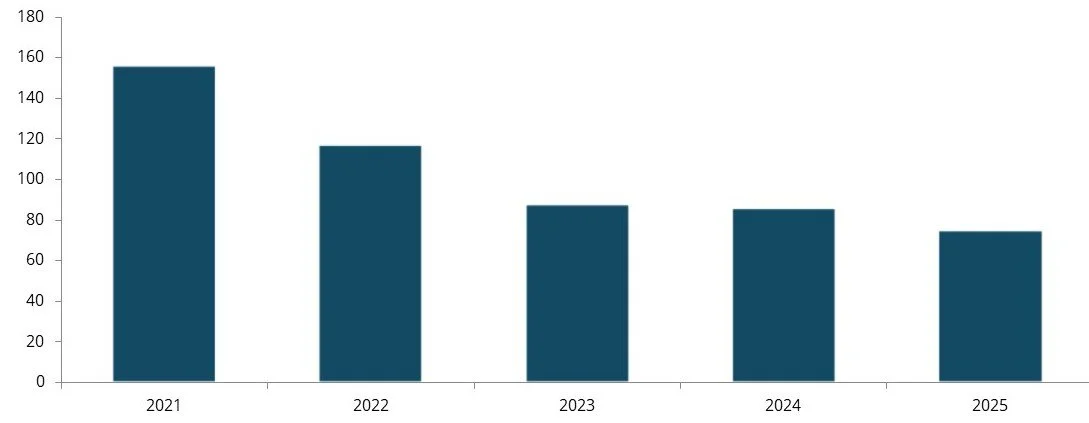
M&A ACTIVITY

North American Building Material Distribution Transaction Velocity

DEAL SPOTLIGHT

Date: January 2025
Target: Beacon Roofing Supply (BECN)
Buyer: QXO
Transaction Value: $11 Billion

Strategic Fit:

  • The acquisition establishes QXO as a scaled platform in specialty building materials distribution, anchored by Beacon’s strong market position in roofing and exterior products.

  • The deal reflects the strategic value of branch density, logistics capability, and purchasing leverage in a category where service levels and delivery reliability are critical to contractor loyalty.

Expected Outcome:

  • The combined business is expected to pursue operational efficiencies, enhanced procurement leverage, and continued consolidation in a highly fragmented market.

  • With a strong foothold in roofing and exterior systems, QXO is positioned to expand category breadth and drive long-term growth through both organic initiatives and add-on acquisitions.

Date: October 2025
Target: Foundation Building Materials (FBM)
Buyer: Lowe's
Transaction Value: $8.8 Billion

Strategic Fit:

  • The acquisition materially accelerates Lowe’s strategy to deepen penetration with large professional contractors, expanding its distribution footprint beyond traditional retail into jobsite-focused, specialty distribution.

  • FBM adds scale in interior systems, a category with consistent demand across repair & remodel and commercial construction, while enhancing Lowe’s fulfillment capabilities, trade credit offering, and Pro service model.

Expected Outcome:

  • The combined platform is expected to drive share-of-wallet gains with professional customers, improve delivery speed and jobsite coverage, and create cross-selling opportunities across interior and exterior product categories.

  • Over time, Lowe’s is positioned to leverage FBM’s network and operating model to support continued growth in Pro revenue and margin expansion.

CLICK HERE FOR 555 RELATED TRANSACTIONS

ABOUT 555 CAPITAL ADVISORS

  • Investment bank and advisory firm providing bespoke M&A, capital raise, and related services to middle market companies

  • Transactions: 100% Sale or Divestiture, Growth Capital, Recapitalizations, Mergers, Management Buyouts, Acquisition Advisory and Financing

  • Industries Served: Manufacturing, Business Services, Consumer, Technology, and Healthcare

  • Highly experienced and personalized client relationships: 25+ years experience, 100+ transactions, and mandates, customized solutions

The opinions expressed herein are those of 555 Capital Advisors. There is no guarantee that any predictions/projections as to certain market activity or events will come to fruition or past market or transaction performance referenced within will yield the same results as transactions previously conducted by 555 Capital Advisors.

Securities offered through Finalis Securities LLC Member FINRA & SIPC

This presentation contains information obtained from third parties, including but not limited to market data. 555 Capital Advisors believes such information to be accurate but has not independently verified such information. To the extent such information is obtained from third-party sources, there is a risk that the assumptions made and conclusions drawn by 555 Capital Advisors based on such representations are not accurate.
 

Packaging: 2026 Market Update


GENERAL TRENDS

Industry Outlook and Observations

  • The North American packaging market continues to show steady growth, supported by strong consumer spending, e-commerce demand, and the global shift toward sustainable materials. The market is valued at approximately $333 billion in 2025 and is expected to grow about 4% per year through 2034. Growth is being driven by online retail, sustainability initiatives, and innovations in recyclable and flexible packaging. Companies are investing in new materials — such as compostable films and single-layer laminates — to reduce plastic waste and meet rising regulatory and consumer expectations.

  • Sustainability and regulation remain central themes. New rules in the U.S. and Europe are accelerating investments in recyclability and reuse. Meanwhile, industry consolidation continues as firms acquire complementary capabilities in automation, smart packaging, and sustainable materials.

  • Operationally, companies are focused on automation, digital systems, and cost management to offset input volatility and supply chain challenges. The sector enters 2026 with stable demand, improving efficiency, and strong investor interest in circular-economy solutions.

Recent Trends

  • E-Commerce Packaging

    • Online shopping continues to drive demand for corrugated boxes and protective packaging. Amazon’s switch from plastic air pillows to recycled paper fill is speeding up the move toward paper-based materials.

  • Policy and Sustainability

    • 2025 is a pivotal year for regulation. The EU Packaging and Packaging Waste Regulation (PPWR) took effect in February 2025, tightening rules on recyclability and reuse. In the U.S., seven states (CA, CO, ME, MD, MN, OR, WA) have adopted Extended Producer Responsibility (EPR) programs that are now rolling out.

  • Recovered Fiber and Input

    • Prices for recycled cardboard (OCC) reached multi-year lows earlier this year but have since stabilized as mills adjust production.

  • Advances in Smart and Tech-Enabled Packaging

    • Investment in automation, tracking, and data visibility continues to rise as companies look to lower costs and improve customer experience.

    • Smart packaging adoption is growing fastest in healthcare, electronics, and food, where traceability and quality control are critical.

M&A Catalysts

  • Regulation & Sustainability: Buyers are targeting firms with strong recycling, compliance, and circular-design capabilities.

  • E-Commerce Growth and Last-Mile: Demand for corrugated and protective solutions is fueling consolidation to increase scale and logistics reach.

  • Capacity & Cost: Acquirers are pursuing deals that optimize production, lower unit costs, and secure recycled fiber supply.

  • Portfolio Mix: Companies are shifting toward higher-growth end markets such as food, pharma, and specialty packaging, and away from slower industrial sectors.

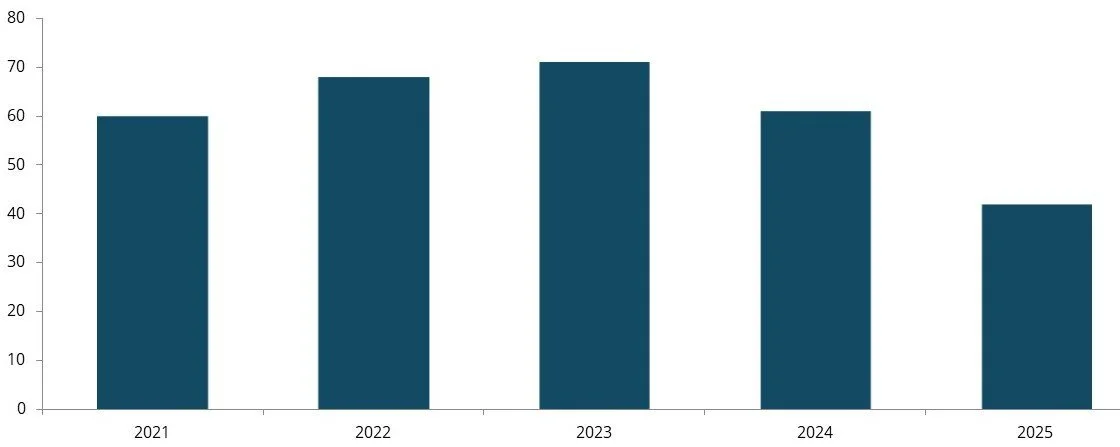
M&A ACTIVITY

North American Packaging Transaction Velocity

DEAL SPOTLIGHT

Date: April 2025
Target: Berry Global Group, Inc.
Buyer: Amcor plc
Transaction Value: $24.7B

Strategic Fit:

  • Amcor brings strength in flexible packaging (food, pharmaceuticals) and global scale; Berry provided complementary expertise in rigid plastics (household, industrial) and a broad North American footprint.

  • The combination accelerates Amcor’s ability to serve growing consumer/healthcare packaging needs, enhance material-science innovation and leverage global manufacturing and R&D capabilities. 

Expected Outcome:

  • Identified roughly US $650 million in synergies by end of year three post-close, with EPS accretion of ~12% in FY26 and over 35% by FY28.

  • The combined entity is better positioned to invest in sustainable packaging, expand product offerings, refine its portfolio, and improve growth, margins and cash-generation. 

Date: January 2025
Target: DS Smith plc
Buyer: International Paper Company
Transaction Value: $7.16B

Strategic Fit:

  • International Paper (IP) is strong in fiber, pulp and North American operations; DS Smith has strong European box/containerboard operations and sustainability credentials. Their businesses are complementary in geography (North America + Europe) and product scope (fiber-based packaging).

  • The deal enables IP to accelerate its strategy in sustainable packaging, benefit from DS Smith’s innovation, and optimize an integrated network of mills, box plants and supply chains globally.

Expected Outcome:

  • The combination is expected to deliver significant cost and operational synergies (e.g., mill & supply-chain optimization) and create a leader in sustainable packaging across major regions.

  • Post-deal, the combined company will have enhanced offerings, stronger growth potential and improved geographic and product diversity.

CLICK HERE FOR 555 RELATED TRANSACTIONS

ABOUT 555 CAPITAL ADVISORS

  • Investment bank and advisory firm providing bespoke M&A, capital raise, and related services to middle market companies

  • Transactions: 100% Sale or Divestiture, Growth Capital, Recapitalizations, Mergers, Management Buyouts, Acquisition Advisory and Financing

  • Industries Served: Manufacturing, Business Services, Consumer, Technology, and Healthcare

  • Highly experienced and personalized client relationships: 25+ years experience, 100+ transactions, and mandates, customized solutions

The opinions expressed herein are those of 555 Capital Advisors. There is no guarantee that any predictions/projections as to certain market activity or events will come to fruition or past market or transaction performance referenced within will yield the same results as transactions previously conducted by 555 Capital Advisors.

Securities offered through Finalis Securities LLC Member FINRA & SIPC

This presentation contains information obtained from third parties, including but not limited to market data. 555 Capital Advisors believes such information to be accurate but has not independently verified such information. To the extent such information is obtained from third-party sources, there is a risk that the assumptions made and conclusions drawn by 555 Capital Advisors based on such representations are not accurate.


Transportation & Logistics: 2026 Market Update


GENERAL TRENDS

Industry Outlook and Observations

  • In 2025, the Transportation & Logistics (T&L) sector is navigating a mix of headwinds and growth opportunities. Freight demand has been somewhat uneven, with pressure on margins from higher fuel, labor, and regulatory costs. At the same time, technology investments, shifts in supply chains, and evolving trade patterns are reshaping the competitive landscape looking toward 2026 and beyond.

  • The North American T&L market (including trucking, intermodal, air, ocean, warehousing, 3PL, and related services) is estimated at ~$2.4–$2.5 trillion in 2025, and is projected to grow at a 3.5%–4.0% CAGR through 2030, with further expansion into the mid-2020s as supply chain realignment and digital transformation accelerate.

Recent and Upcoming Trends

  • Market Normalization and Consolidation

    • Freight volumes are stabilizing after years of swings, though spot rates remain volatile. Smaller carriers continue to exit or merge, while scaled and tech-enabled operators gain share.

  • Technology and Automation Acceleration

    • AI-driven routing, predictive maintenance, warehouse robotics, and real-time visibility tools are reshaping efficiency and competitiveness across logistics networks.

  • Sustainability and Energy Transition

    • Lower fuel costs offer short-term relief, but fleet decarbonization and investment in electric or low-carbon alternatives remain long-term priorities under growing ESG pressure.

  • Reshoring and Labor Challenges

    • Nearshoring trends are realigning freight flows toward regional hubs, while persistent driver shortages and regulatory limits continue to constrain capacity.

M&A Catalysts

  • Tech-enabled differentiation: Buyers are prioritizing logistics, carrier, or 3PL companies that already deploy advanced software, telematics, AI, or digital platforms.

  • Sustainability positioning: Firms with low-carbon fleet capabilities or emissions infrastructure will command premium valuations, especially among strategic acquirers.

  • Footprint & network expansion: Acquisitions to expand regional hubs, last-mile networks, or cross-dock and fulfillment nodes are in demand.

  • Consolidation of weaker players: Margin pressures may push smaller operators to sell, creating roll-up opportunities.

  • Asset-light / asset-heavy arbitrage: Acquirers will seek to balance capital exposure, capturing growth in both asset-light logistic models and asset-heavy carriers.

  • Vertical integration: Entities combining warehousing, freight forwarding, and final-mile delivery are attractive as they can offer full-stack solutions and cross-sell efficiencies.

M&A ACTIVITY

North American Transportation and Logistics M&A

DEAL SPOTLIGHT

Strategic Fit:

  • Stonepeak acquires ATSG to gain scale in air-cargo leasing and logistics around e-commerce and freight services.

Expected Outcome:

  • The deal positions ATSG for growth in freight/leasing, supports e-commerce logistics expansion, and provides Stonepeak a stable asset in infrastructure/logistics.

Strategic Fit:

  • Radiant strengthens its Mid-Atlantic freight forwarding and cartage operations by integrating these regional players under its global logistics platform.

Expected Outcome:

  • The acquisition is expected to enhance Radiant’s regional market share, broaden its service offering in the U.S., and improve scalability and operational efficiency.

Date: April 2025

Target: Air Transport Services Group, Inc.

Buyer: Stonepeak Capital

Transaction Value: $3.1B


Date: April 2025

Target: USA Logistics Services, Inc. and USA Carrier Services, LLC.

Buyer: Radian Logistics, Inc.

Transaction Value: Undisclosed

CLICK HERE FOR 555 RELATED TRANSACTIONS

ABOUT 555 CAPITAL ADVISORS

  • Investment bank and advisory firm providing bespoke M&A, capital raise, and related services to middle market companies

  • Transactions: 100% Sale or Divestiture, Growth Capital, Recapitalizations, Mergers, Management Buyouts, Acquisition Advisory and Financing

  • Industries Served: Manufacturing, Business Services, Consumer, Technology, and Healthcare

  • Highly experienced and personalized client relationships: 25+ years experience, 100+ transactions, and mandates, customized solutions

The opinions expressed herein are those of 555 Capital Advisors. There is no guarantee that any predictions/projections as to certain market activity or events will come to fruition or past market or transaction performance referenced within will yield the same results as transactions previously conducted by 555 Capital Advisors.

Securities offered through Finalis Securities LLC Member FINRA & SIPC

This presentation contains information obtained from third parties, including but not limited to market data. 555 Capital Advisors believes such information to be accurate but has not independently verified such information. To the extent such information is obtained from third-party sources, there is a risk that the assumptions made and conclusions drawn by 555 Capital Advisors based on such representations are not accurate.